


Sermons & Homilies

Zacchaeus is an example of the spiritual athlete and an image of a central virtue essential to the Christian life - zeal. Zacchaeus had already been transformed in spirit; that is why he desired to see Jesus, but it was zeal which did not let his stature or dissolute reputation stop him and which energized these holy desires. Because of zeal, he climbed a tree, not allowing any physical limitations to keep him from engaging in what was for him a truly spiritual act - seeing Jesus; because of zeal, though he was known by all as a crook, employed by the Romans, and swindling his own people, yet he raised himself up to a place from which he could see Jesus and be seen by the whole crowd; because of zeal, this treasonous robber received Jesus “joyfully” into his house, the Evangelist tells us; and, because of zeal, he confesses to the Lord his wrongs and how he will remedy them.

Today, on the Sunday after the Nativity of Our Lord and God Jesus Christ, we commemorate the Holy Righteous Prophet-King David, the Holy Righteous Joseph the Betrothed, and the Holy Apostle James the brother of God and first bishop of Jerusalem. Each of these saints requires their own accolades. Each requires their own sermons. Each requires their own rightful place of honor. Each possesses their own rich history. Each possesses a rich tradition of hagiography. Each is perpetually honored by the Church, whether explicitly or implicitly.

Around the year 271, there was a young man who lived in Lower Egypt, born to wealthy landowner parents, both of whom had only recently died, leaving the young man to care for his little sister and the upkeep of the family home. This young man went to church one day, and while there, he heard the Gospel which we have just heard. Writing about this experience, his friend says that the young man realized this passage had been read for his sake and he immediately left the church, gave away all the land that he had inherited, and then sold his possessions, distributing the money to the poor, and saving some for his sister. This young man we know as St. Antony the Great, and his friend and biographer is St. Athanasius of Alexandria. Originally, St. Antony’s Life was written in Greek, but within twenty years it was translated twice into Latin, then into Coptic and Syriac, and became the impetus for many who desired that perfection which comes to those who leave their homes to make the desert a city.
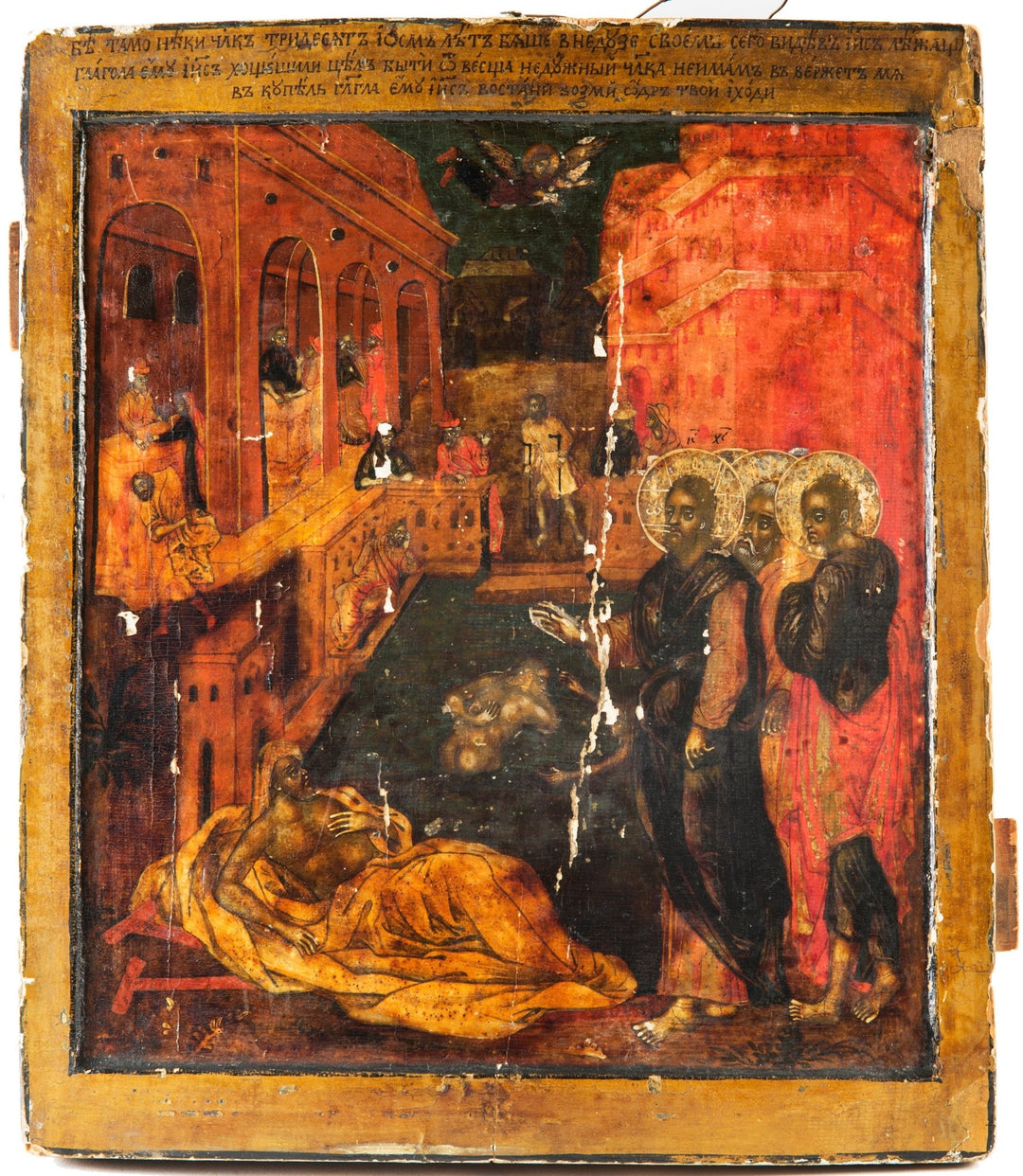
It’s in this state that Christ comes to us and asks us the question upon which hinges the entire Christian life: Wilt thou be made whole? (Jn. 5:6). “Do you want to be healed?” The answer may seem self-evident. Why else would the man be laying there by the sheep pool? But significantly, the paralytic does not simply say, “Yes.” He begins to explain why he can’t be healed. Sir, I have no man, when the water is troubled, to put me into the pool (Jn. 5:7). We do something very similar. We presume that we want what’s best for ourselves, we presume that we truly desire spiritual health and salvation. “Why else would I be living a Christian life? Why else would I have come to the monastery?”