



Sermons & Homilies

Could it be that we have all that we need to attain salvation? That we need no further comfort in food, drink, or housing? That we do not need more sleep, better health, or fewer worries? Perhaps, but what if my health has improved a bit, I’ve been able to make more money, I am sleeping better, eating healthier, am more attentive, praying with compunction, then am I more peaceful, am I more thankful, do I complain less, do I pray more or say the Jesus prayer more and use my time and energy to overcome laziness, despondency and sin within me? What is more, if in any way God has eased our suffering or quelled our intrusive thoughts or subdued our passions, have we become more of the Christian that we would like to be, committed ourselves more to ascetic disciplines and attendance at the Divine Services, or are we glad our life has become a bit easier but have not decided to live more fully for Him? Such are the questions that are addressed in our Gospel reading today.

What do we do when all seems lost? Where do we turn when there’s no one to turn to? All of the hopes and dreams, all the desires and aspirations of the disciples lay lifeless in a stone cold tomb. We trusted that it had been [Jesus] which should have redeemed Israel (Lk. 24:21). Though the Lord had foretold to them numerous times that He would be betrayed, scourged, mocked, and crucified, the calamity still over took them by surprise.

My Fathers and brethren, we’ve arrived at the last week of Lent. Many of us are exhausted, some discouraged, perhaps even given up, waiting for Pascha to bandage up our wounds and hope for a better Lent next year. Or perhaps we’re succeeding in whatever way we might imagine success looks like. Either way, it’s easy to begin our calculations, or rather, to revert to a calculating mind with regards to our souls.

Today, on the Sunday after the Nativity of Our Lord and God Jesus Christ, we commemorate the Holy Righteous Prophet-King David, the Holy Righteous Joseph the Betrothed, and the Holy Apostle James the brother of God and first bishop of Jerusalem. Each of these saints requires their own accolades. Each requires their own sermons. Each requires their own rightful place of honor. Each possesses their own rich history. Each possesses a rich tradition of hagiography. Each is perpetually honored by the Church, whether explicitly or implicitly.
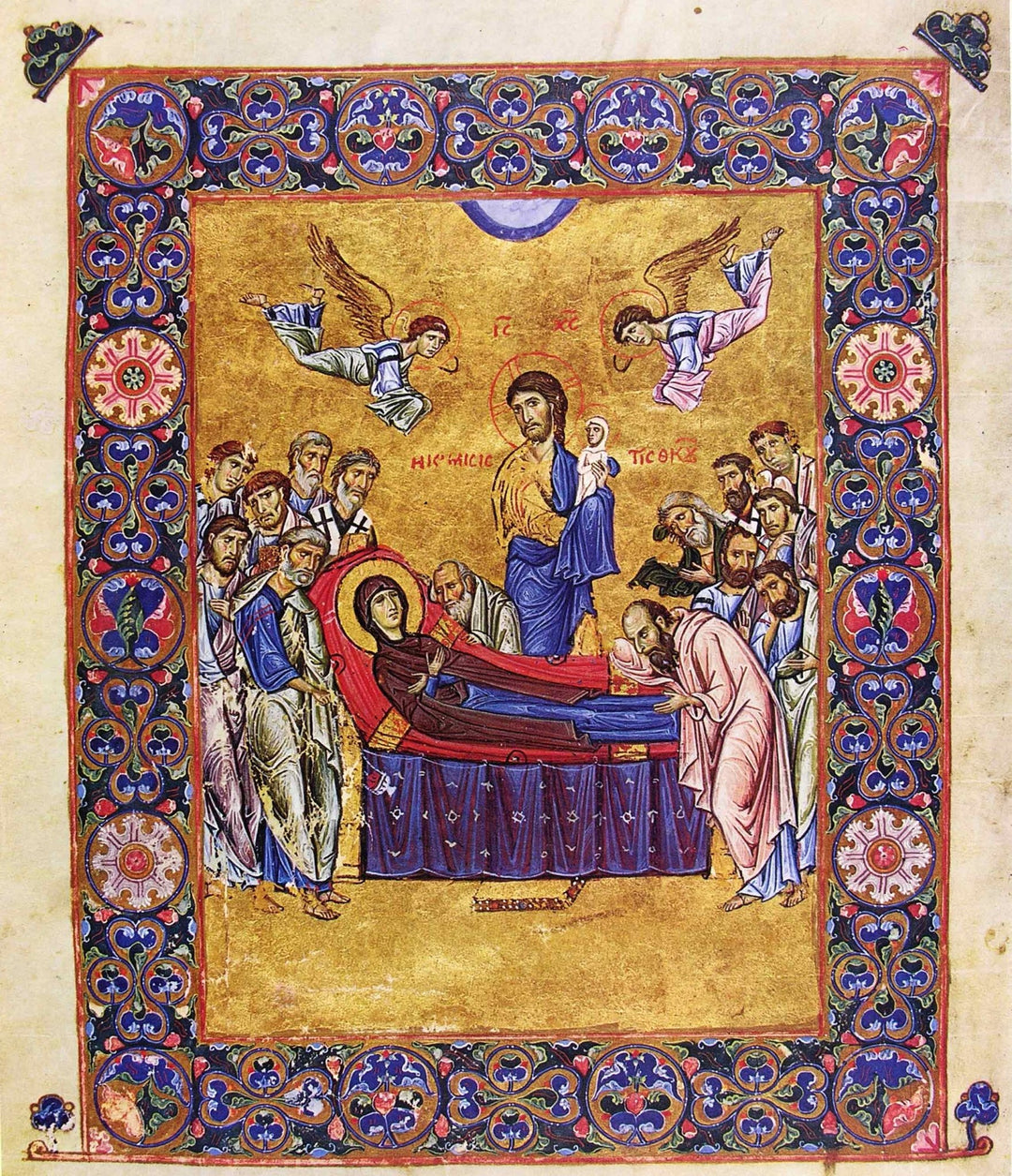
How do we sum up a life? How do we encapsulate a person’s whole being into a few words? Often, we are at a loss at a funeral to fully depict the life of the person being commemorated. We try our best with anecdotes, with words of advice that have stuck with us. And so it is fitting today, when we celebrate not the death, but the passing over from death to Life of the Most Holy Theotokos, to find a way to sum up her life. I would offer her own words, the words she gave in response to the Archangel Gabriel at the Annunciation, as perhaps the most succinct and perfect summation of the life of our Panagia.


